Scientists Achieve Unprecedented Quantum Breakthrough Using Particles That Follow Two Movement Paths Simultaneously
Summary
Scientists achieve groundbreaking quantum breakthrough by making particles simultaneously follow two different movement paths, violating fundamental physics bounds and demonstrating unprecedented quantum weirdness that could lead to more stable quantum computers resistant to environmental interference.
Key Points
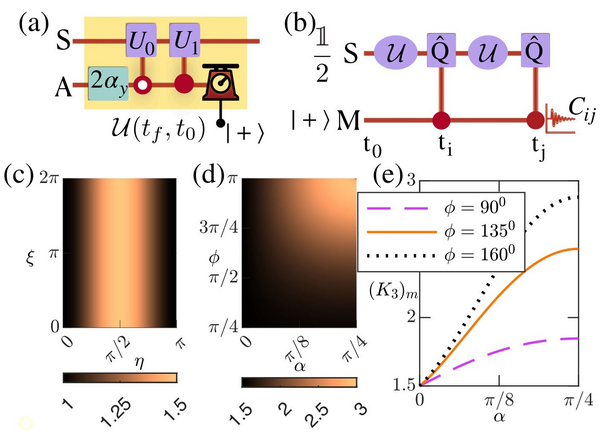
- Scientists demonstrate quantum systems can violate the temporal Tsirelson's bound by using superposition of unitaries, where particles follow two distinct sets of movement instructions simultaneously
- Researchers use NMR technology to control a carbon nucleus qubit and achieve extreme violations of the Leggett-Garg inequality, confirming unprecedented levels of quantum weirdness
- The superposed motion provides enhanced protection against environmental noise that typically disrupts quantum states, potentially enabling more stable quantum computers