AI-Powered Chemical Research Agent Now Autonomously Translating Scientific Literature Into Robotic Lab Experiments
Summary
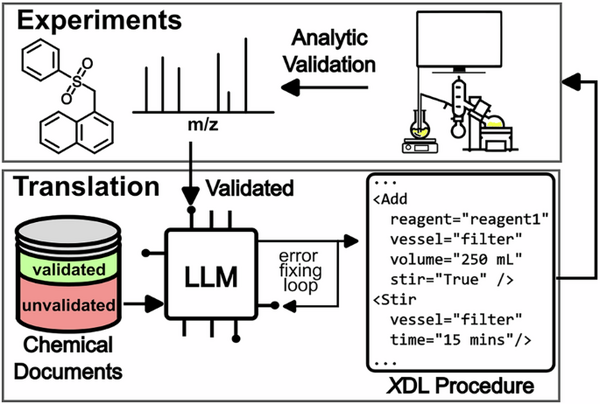
A groundbreaking AI system called ACRA is now autonomously reading scientific literature and translating chemical synthesis procedures into robotic lab experiments, successfully completing six real-world synthesis examples across two robotic platforms and promising to revolutionize automated chemistry research.
Key Points
- A new LLM-based chemical research agent workflow called ACRA is now autonomously extracting synthetic procedures from scientific literature, translating them into universal XDL code, and executing them on robotic chemistry platforms.
- The system successfully bridges the gap between written chemical literature and real-world robotic execution, with six realistic synthesis examples completed across two robotic platforms, dramatically improving reproducibility and verification of reported procedures.
- By combining large language models with chemputation technology, the workflow is set to revolutionize automated synthetic chemistry research, enhancing scalability, safety, and data extraction while reducing the labor-intensive burden of manual literature reproduction.