New 'Lakebase' Architecture Promises to Revolutionize Databases With Open Storage and Zero Vendor Lock-In
Summary
A groundbreaking new database architecture called 'Lakebase' is emerging, combining transactional database power with cloud data lake flexibility, promising serverless compute, instant cloning, unified workloads, and true multicloud portability — all while eliminating costly vendor lock-in through open storage formats.
Key Points
- A new database architecture called 'Lakebase' is emerging, combining transactional database capabilities with the flexibility of cloud data lakes by separating compute from storage and storing data in open formats on low-cost cloud object storage.
- Lakebase addresses three major failures of traditional databases: fragile and costly operations, a clunky development experience that clashes with modern agile workflows, and extreme vendor lock-in caused by proprietary monolithic architectures.
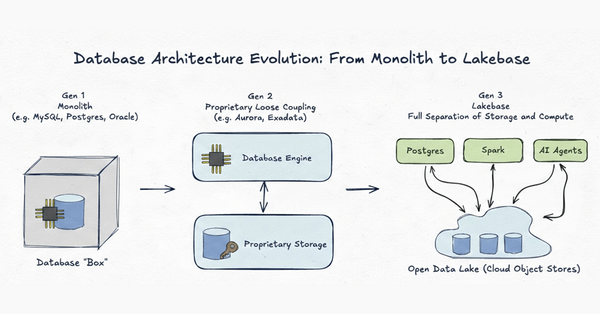
- Database architecture is evolving through three generations — from monolithic systems, to proprietary loosely coupled storage, to the Lakebase model — which enables serverless Postgres compute, instant branching and cloning, unified transactional and analytical workloads, and true multicloud portability.