Claude Matches Specialized Chemistry Tools on NMR Tasks, Shifting AI Focus From Models to Workflows
Summary
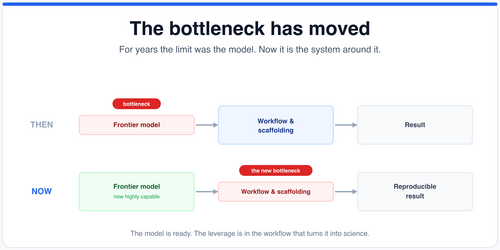
Anthropic's Claude, with zero chemistry-specific training, now rivals dedicated tools like ChemDraw on NMR prediction tasks, proving AI model capability is no longer science's bottleneck — the real frontier is building the workflow infrastructure that connects frontier models to real data, enabling reproducible, auditable scientific research.
Key Points
- Anthropic's general-purpose Claude model, with no chemistry-specific training, rivals and in some cases outperforms dedicated tools like ChemDraw and MestReNova on NMR prediction tasks, signaling that AI model capability is no longer the primary bottleneck for scientific work.
- The real challenge now lies in building the workflow infrastructure around frontier models — connecting them to real data sources, enabling code execution, verifying outputs against evidence, and producing auditable results — rather than simply improving the models themselves.
- K-Dense Web is positioning itself at this workflow layer, operating model-agnostically across frontier AI systems to turn raw model intelligence into reproducible scientific research, and is actively seeking collaboration with labs and researchers to advance this approach.