Hugging Face Launches Programmable Reachy Mini Desktop Robots
Hugging Face launches programmable Reachy Mini desktop robots, available in wireless ($449) and lite ($299) versions, fully programmable in Python and integrated with Hugging Face Hub.
A groundbreaking AI model called Centaur simulates human cognition and decision-making with 64% accuracy, trained on over 10 million data points from psychological experiments, paving the way for unprecedented insights into the human mind.
OpenAI unveils an AI-powered web browser, integrating its Operator web-browsing agent, challenging Google Chrome's dominance and gaining direct access to user data.
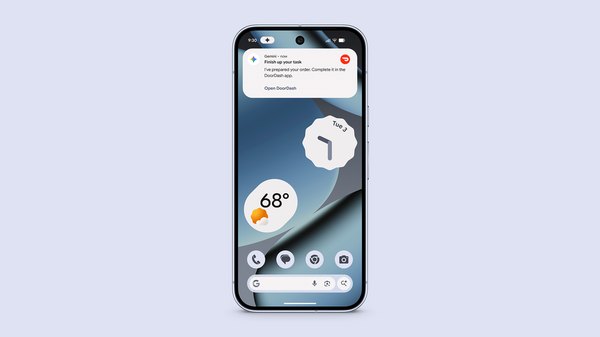
Google's AI assistant Gemini lands on Wear OS smartwatches, enabling users to speak naturally, manage tasks across apps, recall details, and receive timely reminders on their wrist.
The new Model Context Protocol (MCP) standardizes communication between AI agents and external tools, streamlining integration efforts and boosting efficiency through a client-server architecture where servers expose capabilities that clients can access.
A groundbreaking UCLA study uncovers remarkable similarities in neural patterns between biological brains and AI systems during social interactions, unveiling 'shared' and 'unique' neural subspaces that could revolutionize our understanding of social disorders and pave the way for socially aware artificial intelligence.
Context7 MCP Server fetches live code examples and documentation, allowing AI coding assistants like Cursor, Windsurf, and Visual Studio Code to provide relevant code docs when users add 'use context7' to prompts.
Google Workspace integrates AI-powered Gems that assist users with various tasks like content creation and message refinement directly within apps like Docs, Slides, Sheets, Drive, and Gmail, enabling seamless task completion without switching between applications.
Developers are learning habits like context, research, problem framing, refining, and critical thinking through the Sens-AI framework to unlock AI's full potential for coding tasks, avoiding 'rehash loops' where AI models generate incomplete solutions.
Warp 2.0, an AI-powered coding environment with a built-in code editor, launches, promising a future where AI assistance makes manual coding less common, providing a seamless experience for managing local and cloud-based AI agents within its terminal interface.